≡ Menu

News just in is that investigators in Kyrgyzstan, which recently had a change of government, says that a relative of the deposed President Kurmanbek Bakiyev had a private zoo in a house. The animal collection unfortunately includes many animals from the IUCN Endangered Species List including two snow leopard cubs. Officials are trying to protect and rehouse the animals now.

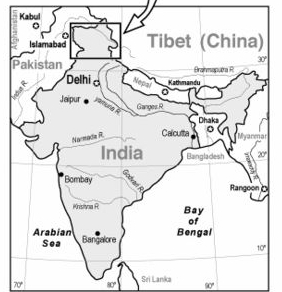
Snow leopard habitat Indian Himalayas

Spiti Valley in north Indian Himalayas, home to snow leopards. A Snow Leopard Research Centre is to be established to protect the cat and it's habitat. Map Wikipedia.

It’s likely that India’s first high-altitude research centre for studying snow leopards will be situated in the mountains of Himachal Pradesh in north India. The Centre will be in the Kibber plateau of Spiti valley, and will be set up jointly with the National Conservation Foundation.

Sanjeeva Pandey, Chief Wildlife warden, is optimistic saying “comprehensive study on snow leopards will be conducted, including research on the prey base of snow leopards.” One of the snow leopard’s main prey is the blue sheep (also known as bharal). Unfortunately blue sheep are often attacked by stray dogs whose population has been growing in the area.

Snow leopard country, Spiti Valley north India.

The dry and remote region of Spiti Valley, soon to have a Snow Leopard Research Centre. Snow leopard numbers are decreasing because their prey, the blue sheep is decreasing by being attacked by wild dogs.

A recent survey found only about 500 blue sheep where previously there would have been thousands. The Centre plans to restrict the population of stray dogs in the habitats of snow leopards to help the blue sheep numbers increase.

Another role for the Centre is research on the actual numbers of snow leopards still there. Recently the Wildlife department set up 25 trap cameras with sensors in different places in Spiti’s Kibber plateau but only five snow leopards could be located in an area of about 1,000 square kilometres. If the number of blue sheep increases it is hoped the number of snow leopards will increase also.

Rodney Jackson with a blue sheep killed by snow leopard

Rodney Jackson with blue sheep killed by snow leopard. Photo Snow Leopard Conservancy

Rodney Jackson from the Snow Leopard Conservancy has been nominated again for this prestigious prize. (He was also nominated in 2008).
The Indianapolis Prize “is the largest individual monetary award for animal species conservation in the world and is given as an unrestricted gift to the chosen honoree.  The Prize is given every other year to an individual who has made extraordinary contributions to conservation efforts involving a single animal species or multiple species.”

Rodney was one of the first snow leopard researchers to capture and radio collar wild cats in the early 1980’s and this work was a major leap forward in helping conservation of the endangered species. Since then he’s been working not only researching the cats but also with the communities which share its habitat, creating opportunities for snow leopard eco-tourism and helping villagers with livestock avoid snow leopard predation. If our wonderful cat ends us surviving long term in the wild, Rodney will have been one of the major contributors to that.

Saving Snow Leopards Blog” wishes Rodney all the best for this prize.

Earth dayHi all. Thursday, April 22nd is the 40th Anniversary of Earth Day! Help raise awareness about protecting the planet by going to the Earth Day site and doing one small thing this week to make a difference. Recycle garbage, support an environmental cause, help clean your local park, stop for an injured wild animal, what ever it is. Let’s celebrate this special Earth. It looks after us and we need to look after it.

P.S. Please be patient with the website, as you can imagine they are being flooded today!

Snow leopard jump

Well here it is! The new “Saving Snow Leopards” blog is launched today. Thanks to Paul who did all the WordPress slog and Nadia who created the banner. Thanks also to Rex for support and ideas.

I hope together with readers and supporters we can go onto bigger and better things to bring the plight of this beautiful endangered cat to more people and policy makers around the world.

Please send me comments and suggestions!

Philip Riordan of the Xinjiang China snow leopard project

The Xinjiang Snow Leopard Project team is back in China – and they’ve expanded their work from just Xinjian province to across China, a very big task and we wish them luck!

The project has been running for a few years and is headed up by Philip Riordan, senior researcher at Oxford University’s Wildlife Conservation Research Unit. Philip says in his blog “ we’re being encouraged by the Chinese authorities to include other provinces in our project.  Kun and I paid a visit to Sichuan in the summer and were delighted to find signs of snow leopard in Wolong Biosphere Reserve and giant panda hang-out. We have support from the local forestry administration and hope to survey areas on the eastern edge of the Qinghai-Tibetan Plateau in the coming winter, so expect more boring discussion of warm clothing and ice! Excitingly, the Sichuan Forestry Administration have taken some photos of snow leopards using remote camera traps and I hope to be able to post these up soon.”

What I especially like about Philip’s approach is his empathy with the local community as well as the endangered cats he’s researching and trying to save. Commenting on a recent prosecution in Xinjiang of two farmers accused of killing a snow leopard Philip says, “These are farmers from a very poor community, trying to protect their family interests and stop a snow leopard taking their livestock. Hard line conservationists will view any illegal killing of endangered wildlife as a serious and punishable crime. Legislation in China, and other countries, to protect endangered species enshrine this principle, but less than hard-liners hope that court systems will allow for some sensitivity.

“We need sensitivity, because the people living and working with snow leopards and other dangerous or damaging wildlife hold the solution to their protection. In an ever increasingly crowded world, we cannot separate people from these animals, so we must find ways to ensure that vulnerable communities are not disadvantaged by the goals of conservation.”

This is an exciting project and you can catch more about how its going on Philip’s blog here.

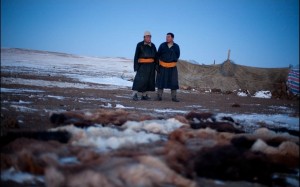
Mongolia extreme winter March10

Men standing with livestock killed by extreme winter in Mongolia. Photo Sheila Zhao, GlobalPost.

Mongolia has been going through a “dzud,” an extremely cold winter following a summer drought. According to the Mongolian government, an estimated 4.5 million animals have died across the country in the last few months, a huge blow to the herding community that makes up a large part of the population.

Herder woman in Mongolia's extreme winter.

A nomadic herdswoman in remote part of Mongolia suffering worst winter cold and snow in decades. Photo by Sheila Zhao, GlobalPost

A nomadic herdswoman in remote part of Mongolia suffering worst winter cold and snow in decades. Photo by Sheila Zhao, GlobalPost

Record snowfalls and temperatures plummeted to minus 50 degrees Celsius (minus 59 Farenheit), making this the worst dzud in decades.

Herding communities depend on livestock for 90% of their income and officials worry an increase in crime, begging and prostitution may result, as desperate herding families, unable to find alternatives, seek to feed themselves and their families.

In the southern part of Mongolia, snow leopard region, the “dzud” may also encourage snow leopard poaching, despite recent years of successful community collaboration projects with organisations like the Snow Leopard Trust, protecting the endangered cats.

The government and UNICEF have appealed to the local and international community for urgent support to reach the herders with fodder, fuel, medicines, food and warm clothing.

Rana Flowers, UNICEF Representative in Mongolia said recently, “The UN is acutely aware of the need to reach increasingly isolated populations with fuel and medicines, to get those in need out to trained medical care and to provide hygiene kits to stem the spread of disease, to ensure safe delivery and newborn care and to prevent the deepening of chronic malnutrition in this country.”

UNICEF says it faces a critical need for an additional USD 400,000 for medical supplies, equipment, micronutrients, and hygiene interventions as well as $322,000 to reach the growing number of affected communities with other life saving interventions.

The Snow Leopard Trust (SLT) has established a relief fund to help families through this crisis. An SLT partner, the Snow Leopard Trust UK, is giving $12,000 raised by Snow Leopard Vodka for aid like hay for remaining livestock. ‘Good on you’ to the folks at Snow Leopard Vodka!

If you’d like to support this effort to help the herding communities of Mongolia at this critical time you can do so through the Snow Leopard Trust here.

“Cat of the Heavens” by Deborah Peters

Today I’m featuring another wildlife artist who has done a painting of a snow leopard. I’m in awe of these generous and talented people. And it’s been fascinating to feature some of these artists and see how they interpret the same animal so differently, but each with a sense of wonder and enchantment. See Martin Aveling’s “An eye to the future” and Michael Pape’s “Ghost of a Chance”

Today it’s Debra Peters who has worked in computer animation and 3D in the film industry. She says what she learned there was “Show the story”. She enjoys pushing the envelope with extreme close ups and cropped compositions; what doesn’t enhance the story gets edited out of the picture.

Deborah snow leopard painting is titled “Cat of the Heavens” and she says, “I’ve always loved animals and started painting the Big Cats a few years ago. There’s something so regal and majestic about them. I’ve always been infatuated with the Snow Leopard’s beauty, but when I started reading about them on the Snow Leopard Trust website, they truly are unique from other cats. Their elusiveness, endangerment and yet ability to just hide from man unless they choose to be seen, is amazing to me.

“The desire to learn more about those I love to paint has been my focus this year. Up till now, I simply appreciated the beauty and soul of these animals. A little research unveiled some disturbing truths on how many are just trying to survive.

“This painting I’ve done is 36″ high by 24” wide, larger than life-size. I wanted to share this beautiful face that is aware of the viewer’s presence, but not threatened, just boldly staring back with those eyes that stare straight through us. What would she say if she could? And can we appreciate this moment? For me, doing this painting was humbling and I’m so proud to be partnered with the Snow Leopard Trust, who have truly found ways to help that make sense for the local people sharing the lovely cats’ domain.”

Thanks so much Deborah, this is a strong and stunning work. I love the color of what looks like sunlight on the fur. And congratulations also on your support of endangered animals and the Snow Leopard Trust.


Altai mountains and wild meadow Photo Altai Project

I’ve become very interested in the Altai region in Russia recently because it’s snow leopard habitat and it’s likely I’ll be there this July. I’ve been trying to find the word the local people use for snow leopard and got an email from Jennifer Castner, the Director of the Altai Project.

But first, where is the Altai you might ask, as I did when I first heard about it. Well, it’s the unique and diverse mountain region of southern Siberia. And parts of the Altai have been declared a natural UNESCO World Heritage site for their importance in the preservation of endangered mammals, such as snow leopard, the Altai argali (a wild sheep) and the Siberian Ibex (wild goat). There are also some very ancient archaeological remains.

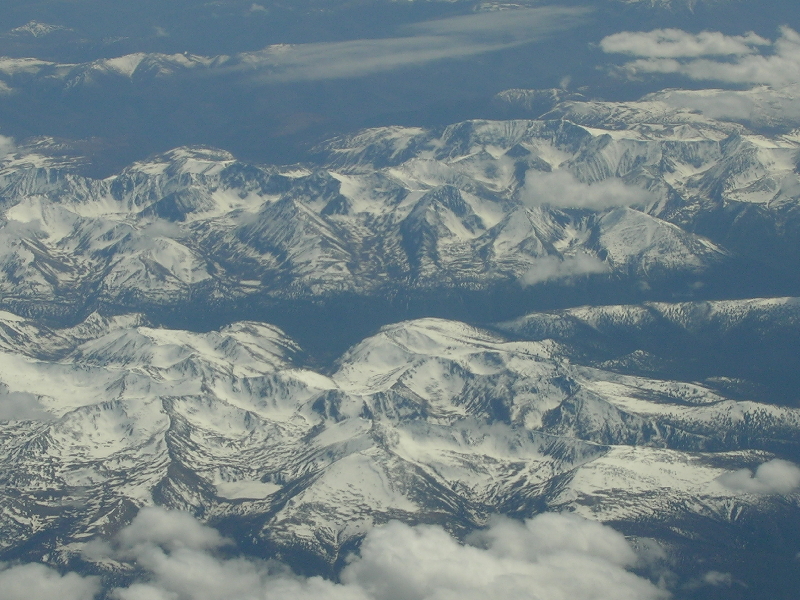
Altai Mountains from the air. Photo by Francesco Bandarin, UNESCO.

There’s a lot of pressures on this spectacular area, from gas pipelines to inappropriate development and underemployment of many of the local population. The Altai Project (based in California) is a small organisation working to ‘strengthen communities and protect nature in the Altai’. They’re working with local people and supporters from all over the world to protect the natural and cultural heritage and ways of life in the face of these challenges.

Archaeological remains in the Golden Mountains of Altai. Photo by Gary Tepfer UNESCO

One of the goals of The Altai Project is nature conservation, which includes endangered wildlife like the snow leopard. And like most snow leopard habitats, there is very little hard data on how many cats remain and the best way to support them in that region.

Jennifer is an expert on this remote part of the world. She’s lived and studied in Moscow and lived and worked in Kiev and is fluent in Russian. She’s travelled extensively in Siberia and the Russian Far East and Ukraine.

Here’s her explanation for the terms for snow leopard used by various peoples in this part of the world.

Jennifer – “I noticed (on the Saving Snow Leopard’s Blog) that you’ve been trying to figure out the term for snow leopard in Russian, and I’ve been rather idly wondering about the exact etymology of the terms I know. :) In the Altaian range of their habitat, they seem to refer to them mostly as “(snezhny) bars”, but also as “irbis.”

I hunted around a bit online to better understand the differences. Neither word is actually Russian in origin, which I knew. ‘Snezhny’ is a Russian adjective means ‘snowy’. That’s easy.

‘Bars’ seems to come to Russian from Iranian/Persian (and possibly further back from a Turkic language, depending on where you look. It seems to refer to any big cat, but generally is used for ‘snow leopard’ and is in common use across Russia. (The Amur leopard is called a ‘leopard’ in Russian. ‘Tigr’ for tiger.)

‘Irbis” is definitely a Turkic word for snow leopard or just panther/big cat. It’s the term used in the Altaian language and probably some of the other indigenous (Turkic) peoples living in historic snow leopard habitat. I think it’s more localized in use, but still recognizable to many people who know their wildlife.”

Thanks Jennifer. ‘Snezhny’ for snow is good to know, although I think in July there won’t be too much of that when I go, but ‘Bars’ is a useful word in any-one’s language!

Earth Hour

I hope people got a chance to turn their electricity off for Earth Hour on March 27. It's only a small thing but reminds us of the small and big things we can do to help sustain our environment into the future.

So we had a dozen friends around on Saturday night, a nice way to celebrate Earth hour. I cooked the curries and they all brought a candle :-)

Good fun and we saved a heap of electricity as we sat all night talking about life and the state of the world (and food) in the candle light.