≡ Menu

Small world in zoos

Gregor at Woodland Park Zoo. Photo by Rana Bayrakci.

Gregor at Woodland Park Zoo. Photo by Rana Bayrakci.

Recently I was in touch with Rana Bayakci, the Program Coordinator for the Snow Leopard Network (SLN) in Seattle, USA.  And what a coincidence!

Turns out Rana was a Keeper at the Woodland Park Zoo in Seattle in the early 1990’s when she met Gregor, our beautiful male snow leopard who was at Melbourne Zoo for many years until his sad death last year aged 20 years.
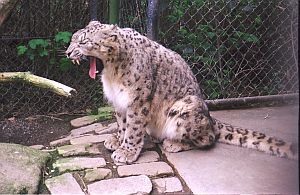
Gregor - yawning at Woodland Park Zoo. Photo by Rana Bayrakci.

Gregor - yawning at Woodland Park Zoo. Photo by Rana Bayrakci.

Gregor was one of the very first snow leopards Rana worked with when she started as a Keeper at Woodland Park. Rana, like many of us, fell in love with Gregor, his sister Katrina (who didn’t live very long), and his parents, Alex and Andrei. This was the family of snow leopards, Rana says, that put her on the path of snow leopard conservation work.

In 1996, Rana actually visited Gregor at Melbourne Zoo and to her delight he remembered her. She says “it was wonderful to see him, he remembered me, the keepers just loved him, and he had a great perch right outside their break/office room window.”

Rana very kindly sent me some photos of Gregor from that time – he was as beautiful and full of personality then as we remember him.

Cheyenne Mountain Zoo promoting its snow loepard conservation work. Photo by KOAA.

Cheyenne Mountain Zoo promoting its snow leopard conservation work. Photo by KOAA.

Cheyenne Mountain Zoo in Colorado has raised money with its “Quarters for Conservation program” that is going towards snow leopard conservation in Mongolia. The Zoo is telling its story with a giant snow leopard poster on the Colorado Springs American National bank building.

Megan Sanders, one of the zoo’s animal behavior managers has just returned from Mongolia where she met with local villagers and herders to encourage them to work towards saving the snow leopards that share their habitat. Megan says that with conservation work it’s important to “approach it from a community based conservation action plan.”

By helping communities get better incomes from other sources “there isn’t that need to go out and poach or need to be illegally selling pelts and things like that on the black market.”

 See more on the Cheyenne Mountain Zoo’s snow leopard conservation support here.

How does “Quarters for Conservation” work? See here.

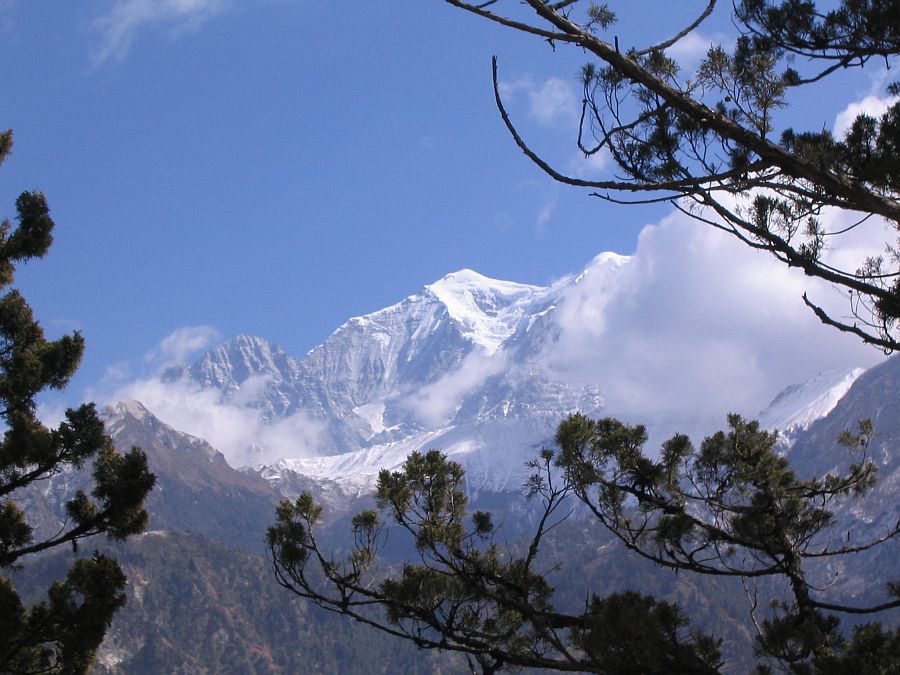
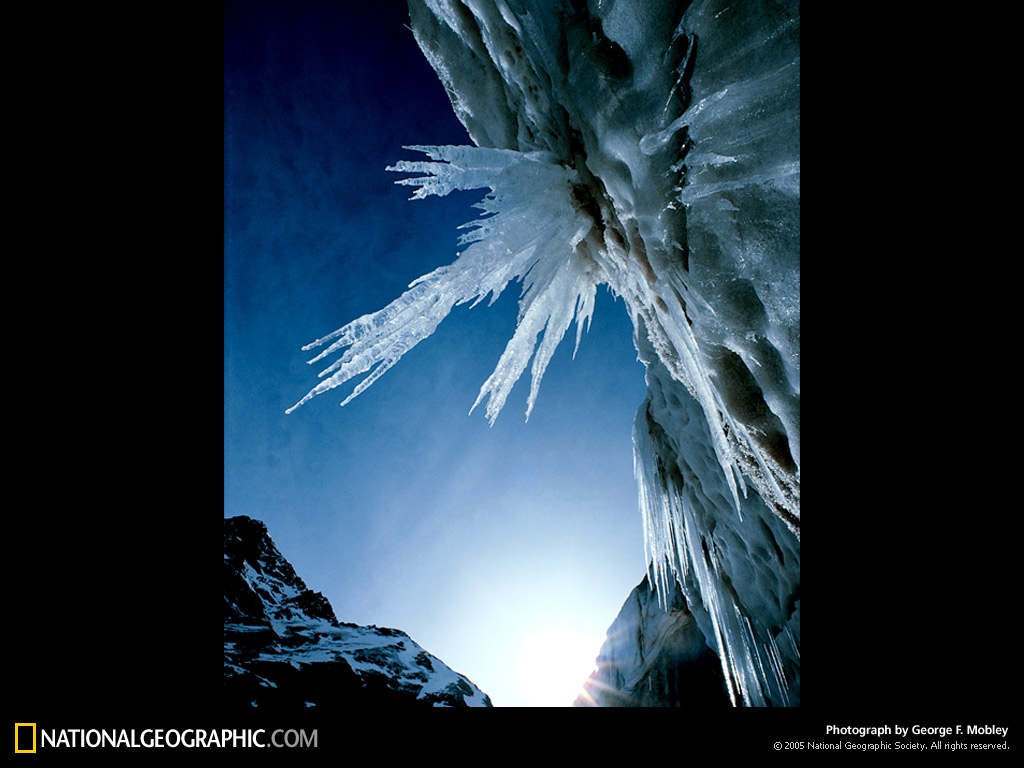
Gangotri glacier. Photo National Geographic George F. Mobley 1984.

Gangotri glacier. Photo National Geographic George F. Mobley 1984.

The Indian Army is getting involved in helping the environment and India’s endangered flora and fauna. 15 men will be going up to the sacred Gangotri glacier in northern India near China’s border to search for snow leopard sightings and evidence of a rare plant, the legendary Brahma kamal, a medicinal plant named after the Hindu God of creation. According to Commanding Officer Ajay Kothiyal, the research material would be forwarded to the Indian Mountaineering Foundation (IMF) and its scientists.

“Due to the area’s inaccessibility and extreme weather conditions, there has been little research on the flora and fauna in the Himalayan region. Flowers like the Brahma kamal, blue poppy, snow lotus and some local medicinal plants find mention in books only (written years ago) and so do rare species like the Ibex (snow goat) and snow leopard. We want to make available some recent data on their availability,” said Kothiyal.

The men will be climbing up around 4500 to 5500m and Kothiyal says “They will photograph and videograph all the rare flora and fauna they come across.

The Gangotri Glacier is a traditional Hindu pilgrimage site. Unfortunately researchers have found that the glacier is retreating possibly due to climate change.

Full article here.

“Retreat of the Gangotri Glacier and climate change”. Article by NASA’s Earth Observatory

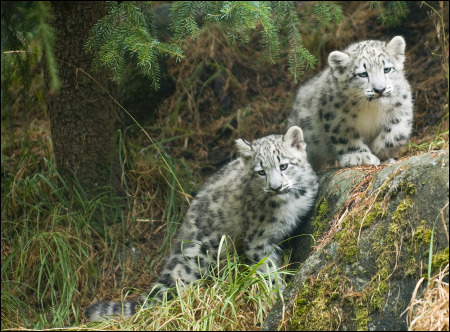
Gobi and Batu at Woodland Park Zoo. Photo by Ryan Hawk WPG.

Gobi and Batu at Woodland Park Zoo. Photo by Ryan Hawk WPG.

Our Gobi gets a namesake in the USA! The 11 week old male snow leopard was born at Woodland Park Zoo Seattle in May and over the weekend 35,000 entered a competition to name him and Gobi it is. His sister is Batu, which means firm and strong. Our Australian Gobi’s sister, Tashi, (Tibetan for lucky) is also firm and strong as I saw the other week when in front of a crowd of school kids she stole Gobi’s meat from him.

Woodland Park Zoo International Snow Leopard Day August 2009

Woodland Park Zoo International Snow Leopard Day August 2009

This weekend the WPZ in Seattle celebrates International Snow Leopard Day with a series of conseravtion talks and the naming of their two recently born snow leopard cubs.

WPZ has one of the most successful snow leopard breeding programs and they do a lot of work with the Snow Leopard Trust. This is the Zoo that Helen Freeman, the founder of the Trust, worked at for many years.

I dropped by the Melbourne Zoo yesterday and visited the new cubs, Tashi and Gobi who are now 9 months old. The are almost as big as mum Meo from a distance. They were play fighting over a huge piece of meat, stalking each other through the grass, peeping around tree trunks and then pounce! Meo was sitting close by watching them intently. I guess she was checking how well her training was going.

A group of students from Mill Park secondary college came by with a sheet of questions about snow leopards from a project they’re working on. Fantastic! We had a great time chatting about the cats and conservation – by the end they were hooked!

Mac OS X Snow Leopard

Mac OS X Snow Leopard

The buzz about the plight of the real snow leopard finally seems to be getting some traction in the Apple Mac community as the launch of the Snow Leopard operating system approaches. The Snow Leopard Trust in Seattle has announced that Apple has invited their Executive Director, Brad Rutherford to do a talk at Apple headquarters about the Trust’s snow leopard conservation programs. Also, Orjan, the Swedish PhD student working on the Trust’s Mongolia research project  will be participating in an Apple event in Sweden soon. Good on you, Apple!

The WWF is calling on governments attending the climate change talks in Copenhagen this December to commit industrialised countries to a 40% reduction in greenhouse gas emissions by 2020 (compared to 1990 levels).

“There is no room for compromise on this issue,” says WWF Conservation Science advisor, Mark Wright.  “Without these cuts the Himalayas face a precarious future – impacting both the unique wildlife and the 20% of humanity who rely on the river systems that arise in these mountains.”

A report released by WWF International yesterday “Eastern Himalayas – Where Worlds Collide” makes us realise just how important and fragile the ecosystem of the Himalayas is.

It reveals the discovery of over 350 new species of plants and animals in the last ten years. An amazing number of animals and plants we never knew existed – including a beautiful ‘flying frog’ with huge webbed feet that help it glide through the air. Researchers also found the world’s smallest deer, the miniature muntjac or leaf deer (just over 60 cm or two feet tall).

These and the many other species found between 1998 and 2008 share the habitat of the endangered snow leopard in remote mountain areas of Bhutan, north-eastern India, northern Myanmar (Burma), Nepal and southern parts of Tibet.

The Report reveals despite these areas being remote they are experiencing massive population growth and demand for land which is threatening many habitats and species.  Another indicator of climate change in the region is the rapid retreat of glaciers. The WWF has launched a “Climate for Life Campaign” to bring the plight of the Himalayas to the attention of the world. They are working with local communities to help them cope with the impacts of climate change.

“This enormous cultural and biological diversity underscores the fragile nature of an environment which risks being lost forever unless the impacts of climate change are reversed,” said Tariq Aziz, the leader of WWF’s Living Himalayas Initiative.

“People and wildlife form a rich mosaic of life across this rugged and remarkable landscape, making it among the biologically richest areas on Earth. But the Himalayas are also among the most vulnerable to global climate change.”


VIDEO NOW UNAVAILABLE – SORRY.

Dr. Tom McCarthy has worked with snow leopards for many years and is Director of Field programs with of the Snow Leopard Trust. In this video he talks about the decreasing numbers of snow leopards in Kyrgyzstan and the community based conservation programs the Trust is developing there. These programs help the Kyrgyz villagers who share snow leopard habitat to sell their beautiful rugs and handicrafts all over the world. With extra income they are able to commit to helping the snow leopards survive in their area. Have a look at this video and if you can support the worthwhile program by purchasing some of these lovely handicrafts. I bought a rug and some stunning table mats in deep reds and soft creams for friends and family for Christmas last year. Everyone loved them. Have a look at the crafts here.

Snow leopard numbers decline in mountains of Nepal. Photo by Sibylle.

Snow leopard numbers decline in mountains of Nepal. Photo by Sibylle.

The news about snow leopards in Nepal seems to be mixed.  The Myrepublica website, a news website from Nepal has reported that the number of snow leopards there has been estimated to have declined – now believed to be between 300 and 400, while previously their number was estimated to be between 400 and 500. Counting of snow leopards was done in the mountainous region from Ganesh Himal to Rolwaling, Sagarmatha, Makalu Varun and Kanchanjungha with the financial help from WWF America, England and Finland. The same report says that the tiger population has also declined. Hopefully these number can be improved in the next years by more conservation efforts. See Report here.

However snow leopard researchers say that the evidence isn’t clear to suggest that number are down, just that the data is being interpreted differently. Let’s hope they’re right. See Snow Leopard Network for more on this discussion.