≡ Menu
Billboard on bridge Bishkek

Billboards for Snow Leopard Forum in the streets of Bishkek, Kyrgyzstan.

President of the Kyrgyz Republic Almazbek Atambayev and officials representing 12 snow leopard range countries have endorsed an ambitious new global initiative conserve critical ecosystems in high-mountain landscapes inhabited by the iconic but endangered snow leopard.

They were by conservationists from many NGO’s.

“I deeply appreciate the fact that our initiative to organize a Global Snow Leopard Forum in Bishkek was supported by the range countries as well as by international and non-governmental environmental organizations. By endorsing Bishkek Declaration on Snow Leopard Conservation and the Global Snow Leopard Ecosystem Recovery Program range countries are committing to scaling up joint snow leopard conservation efforts,” said Almazbek Atambayev, President of the Kyrgyz Republic in his welcome address to the Forum participants.

“If we do not take decisive measures to protect the snow leopard today, we will forever loose this priceless animal, a true gift of nature. Today we are taking first steps. I am confident that together we will be able to achieve the goal we set – to protect our beautiful nature and the symbol of our mountains, the snow leopard.” We all know threats to the snow leopard and its high-mountain habitats are increasing but now there is a blueprint for action. “Saving Snow Leopards” web site congratulates all involved and we look forward to the work that will make the future of the snow leopard and people sharing its habitat secure.

Bishkek website logoAn exciting world first for snow leopards is happening this month. On October 22-23, 2013, representatives of 12 snow leopard range countries and the international conservation community will gather in Bishkek, Kyrgyz Republic for the first ever Global Snow Leopard Forum.

The Forum delegates will discuss urgent actions and a new global strategy to address conservation of the endangered snow leopard and its habitat in the critical ecosystems of Central Asia. It has been planned for some time and organised as a joint effort by the Office of the President of the Kyrgyz Republic Almazbek Atambayev and the State Agency on Environmental Protection and Forestry under the Government of the Kyrgyz Republic.

Many other global and snow leopard NGO’s have also co –organised the event and will be taking part. They include the Global Tiger Initiative, NABU, Snow Leopard Trust, UNDP, World Bank. Sponsors for the Forum are the Global Environment Facility, Snow Leopard Conservancy, WWF.

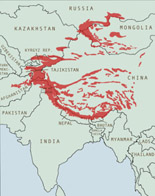
Delegates form the 12 range countries will be present. (Afghanistan, Bhutan, China, India, Kazakhstan, Kyrgystan, Mongolia, Nepal, Pakistan, Russia, Tajikistan, and Uzbekistan.)

I’ll be attending on behalf of the Snow Leopard Network and “Saving Snow Leopards” blog and will keep you updated on the activities of this exciting event. We hope to see higher visibility and understanding of threats to the magnificent snow leopard and commitments made to save the species in each delegate’s country.

Stay tuned!  Cheers, Sibylle Noras.

SN pic Monks Lhasa sept07 SML

Tibetan monks. Photo by Sibylle Noras.

Nearly half of Tibetan monasteries share snow leopard habitat in the high mountains of the the Tibetan Plateau’s Sanjiangyuan region.

A recent study by Panthera showed “Tibetan Buddhism considers the snow leopard and its habitats strictly sacred, and the monks patrol wild landscapes surrounding monasteries to enforce strict edicts against killing wildlife. Senior monks, including the Rinpoche and Khenpos, are important influencers in their communities, positively impacting followers’ attitudes and behaviour towards wildlife.”

Panthera’s Vice President, Dr. George Schaller, explained, “Buddhism has as a basic tenet the love, respect, and compassion for all living beings. This report illuminates how science and the spiritual values of Tibetan Buddhism can combine their visions and wisdom to help protect China’s natural heritage.”

Led by Dr. Li Juan of Peking University, the Panthera -supported study is “The Role of Tibetan Buddhist Monasteries in Snow Leopard Conservation”. It was co-authored by Panthera’s Dr. George Schaller and Dr. Tom McCarthy, the leading Chinese conservation NGO Shan Shui and the Snow Leopard Trust. The researchers covered 360,000 km2 of the entire Sanjiangyuan Region in Central Asia and analysed data from interviews with herders, villagers and monks.

SL photo Panthera Shan Shiu SLT Tibetan Plateau camera trap

Camera trap photo of a snow leopard on the Tibetan Plateau. Photo Panthera / Shan Shui / SLT.

Director of Shan Shui, Dr. Lu Zhi, said, “With Buddhist education, Tibetan people have lived in harmony with nature for thousands of years. Now like everywhere else, the traditional culture on the Plateau is facing the challenge of modernization. Conservationists should work closer with social institutions, integrating scientific methodologies with cultural approaches for better solutions.”

The Study is published in the journal Conservation Biology. Read more on Panthera’s website.

Dr Ram Baran Yadav President of Nepal highlighting importance of snow leopards to the country's biodiversity in the Himalayas.

Dr Ram Baran Yadav President of Nepal highlighting importance of snow leopards to the country’s biodiversity in the Himalayas.

Nepal has some of the most spectacular Himalayan snow leopard habitat and yesterday celebrated its  seventh National Conservation Day with a theme —snow leopard conservation and a call to protect the Himalayas.  President Ram Baran Yadav said the mountain ecosystem is under threat from the pervasive impacts of climate change.

“It is heartening to see conservation leaders take up biodiversity protection as their cause and I hope through this recognition they are further motivated to help protect Nepal’s natural riches, including key species such as snow leopards.”

Last year WWF reported that if greenhouse gas emissions continue to increase steadily, 30 percent of snow leopard habitat in the Himalayas may be lost to shifts in its treeline habitat.


kachelshannon_taj_800Awesome photo of a lone cat in the Pamir Mountains of Tajikistan from a camera trap photo which won Shannon Kachel of Panthera first prize in a camera trap photo competition by TrailCamPro.
Shannon studies as a graduate student at the University of Delaware and leads a Panthera-funded study of snow leopards and trophy hunting of their prey in the Pamirs. Congratulations Shannon! Read more about Panthera’s snow leopard work in Tajikistan.

kashmir goats lge
A study released this week shows the growth in domestic cashmere goat herds across the Tibetan Plateau to Mongolia are threatening the snow leopard in this region.
Research by the Wildlife Conservation Society (WCS)) and the Snow Leopard Trust (SLT) found  the impact of goat herd growth include conflicts with pastoralists, domestic dog attacks  on wildlife and  retaliatory snow leopard killings when the rare cats kill goats. Many other wildlife species like wild yak, chiru, saiga, Bactrian camel, gazelles are also affected.
Professor Joel Berger said, “The consequences are dramatic and negative for iconic species that governments have signed legislation to protect, yet the wildlife is continually being squeezed into a no-win situation. Herders are doing what we would do – just trying to improve their livelihoods, and who can blame them?”
The WCS said “The purpose of the study is to raise awareness among western consumers about the origins of cashmere and its growing impact on wildlife. The authors suggest that the study should serve as the beginning of a dialog among the garment industry, cashmere herders, and conservationists to address and mitigate these impacts.”
“In the absence of commitment across global and local scales, the iconic wildlife of the world’s highest mountains and great steppes will cease to persist as they have for millennia. Rather than serving as symbols of success, these species will become victims of fashion,” said Peter Zahler, WCS Deputy Director for Asia Programs.
The WCS have already launched an initiative to help solve the problem. The initiative, the Responsible Ecosystems Sourcing Platform (RESP), is a public-private partnership with the goal of addressing sustainability issues during various fashion, cosmetic and jewelry industry supply chains – including cashmere.
“Cashmere production is a complicated human issue,” Charu Mishra from the Snow Leopard Trust told the BBC. “Understandably, indigenous herders are trying to improve their livelihoods, but the short-term economic gain is harming the local ecosystem.”
“By improving our understanding of the relationship between indigenous herders, local ecology and global markets, we can implement policies at the national and international level which are better designed to protect biodiversity while supporting the livelihoods of local communities,” he added.

 It’s official. Etsy announced today it is changing its policy so no more items made of endangered animal products can be listed on the global marketplace website.
In May I found a woman’s coat with a snow leopard collar and contacted Etsy asking them to remove it and forbid these type of sales in the future. However Etsy declined and my colleagues at the Snow Leopard Trust launched a petition which in a matter of weeks got over 33,000 signatures, many from outraged Etsy users.
Chad Dickerson, CEO of Etsy however recently met with the Trust and US wildlife officials and as of today no endangered animal product listing will be accepted whether the item is old or recent. Thank you Etsy, this will send a loud and clear message to those in the illegal wildlife trade that endangered animal parts are not products.
And a special thank you to all who signed the petition. This success is up to each one of you.

After discovering snow leopard fur and other endangered animal parts for sale last month I contacted Etsy.com asking them to change their policy and remove the listings. Unfortunately they said it wasn’t their problem. But my friends and colleagues at the Snow Leopard Trust (SLT) and the global snow leopard conservation thought otherwise.

The SLT started a petition calling for Etsy.com to address their disturbing online marketplace for endangered animal parts.

Now over 32,000 people from 55 plus countries have signed the petition and this week Etsy Ceo Chad Dickerson has made tentative steps towards a policy change.

According to the Snow Leopard Trust “Etsy’s CEO, Chad Dickerson, has reached out to the Snow Leopard Trust to inform us that they are aware of the issue and have contacted the US Fish & Wildlife Services to gain a better understanding of the situation.

Brad Rutherford, Executive Director of the Trust says “We’re happy to see that Etsy HQ has taken this first step, which will hopefully lead to them adopting wildlife-friendly policies that will keep endangered animal products off this thriving marketplace – for the benefit of wildlife and the Etsy community.
 
For now, however, there remain hundreds of illegal listings for pre-ban leopard fur, rhino horn and other endangered animal parts on Etsy.com- and so we’re eagerly awaiting more concrete steps from Etsy HQ to address this disappointing situation.
 
We will remain in contact with Etsy HQ and the US Fish & Wildlife Services and have offered to help with the development of policies if it would be helpful.  We will also continue to monitor the endangered species products listed on Etsy.com to see if there is any short-term progress.”

Thanks to Brad and everyone at the Trust who have worked so hard to make this story known to Etsy supporters and sellers and buyers. Etsy is a remarkable marketplace and I look forward to the company doing what their community wants them to do – stop listing endangered animal parts. It is not OK.

22,000! That’s how many signatures we now have on the petition asking Etsy.com to take down all listings with endangered animal furs and parts, including snow leopard fur.

Thanks to all who have signed this petition which is going to Etsy Ceo Mr Chad Dickerson.

So many people love Etsy but are appalled. What are people saying on the petition?

From UK -“I have a little shop on ETSY and this is not the right thing for you to be doing, please close the loop holes that allow this, it gives us all a bad name.”

From Australia – ” Please stop selling fur and other products from endangered animals. by continuing to sell endangered animal products you are encouraging poachers an d contributing to the extinction of these animals, especially the Snow Leopard. Be a responsible corporate citizen. I and my family and friends will not buy from you until you do.”

From USA – “Many magnificent species, including big cats, elephants, and rhinos are being hunted to the brink of extinction for their parts. This horror MUST be stopped. Etsy, please do your part and avoid abetting these horrible crimes in any way. Vintage items may seem as though they aren’t part of this, but unfortunately their sale encourages the continued poaching of endangered animals. Please do the responsible thing and abide by the law.”

From India – “Dear Mr. Dickerson, as a Himalayan conservationist who’s spent a substantial portion of his life, working to save the endangered Snow Leopard and it’s fragile mountain habitat, you can imagine my dismay at finding that your establishment is selling women’s garments trimmed with ‘genuine snow leopard fur.’ I would like to express my deep anguish & indignation at finding this out. May I request you , with all the earnestness I can muster, to ensure that your store puts an end to this reprehensible activity.”

If you haven’t joined the 22,000 people who have signed this petition please do so here. Together we can change Mr Dickerson’s mind and help Etsy and its community do the right thing.

Etsy.com selling illegal animal parts!

The campaign to Etsy started when I found a real snow leopard fur listed by a seller earlier in the week. The Snow Leopard Trust kindly stepped in with a Petition asking Etsy to stop listing endangered animal fur for social responsibility reasons. The story however has now gotten much bigger.

Please read the updated Petition information and sign the petition today.  SIGN

[Update, 5/31: As we’ve (the Snow Leopard Trust) learned from the U.S. Fish & Wildlife Services, it is not only illegal to sell any products made from endangered animals, including “vintage” items, to a buyer in another state, it’s also prohibited under the Endangered Species Act to offer such products for sale in another state, including on a website like Etsy.

 Etsy should not allow any products made with parts of endangered animals to be listed on their site, regardless of their age.

 Etsy’s existing policies ban “illegal animal products” from their site. However, they don’t provide any details on what this entails. As they are offered for sale across state lines, many of the so-called “pre-ban” items made with parts of endangered animals currently for sale on Etsy appear to be listed illegally. Others, in particular the hundreds of items containing ivory, may or may not be illegal, depending on their provenance. As it is often difficult for sellers or buyers to assess where a particular item is from and when it was made, it’s next to impossible to determine if it can be legally sold even within the borders of a state.                                                                                                                                                  

 Etsy’s lack of a clear policy prohibiting ALL products made with parts of endangered animals not only leaves the site vulnerable to being exploited as an outlet for illegally poached products from endangered animals, it also puts sellers and buyers at risk, potentially leaving them open to legal repercussions.

Sign the petition here – SIGN